
Something big has changed in how Nigerian businesses get paid, and many business owners haven't noticed yet.
Under Nigeria's new tax laws, invoices are moving from paper, PDFs, and Excel to a government-validated digital system. For many businesses, an invoice the tax authority hasn't validated will soon carry real consequences.
If you sell to other businesses, supply big companies, or plan to grow, this affects you, even if your own deadline feels far away. Here's what you need to know in plain language.
What is e-invoicing in Nigeria?
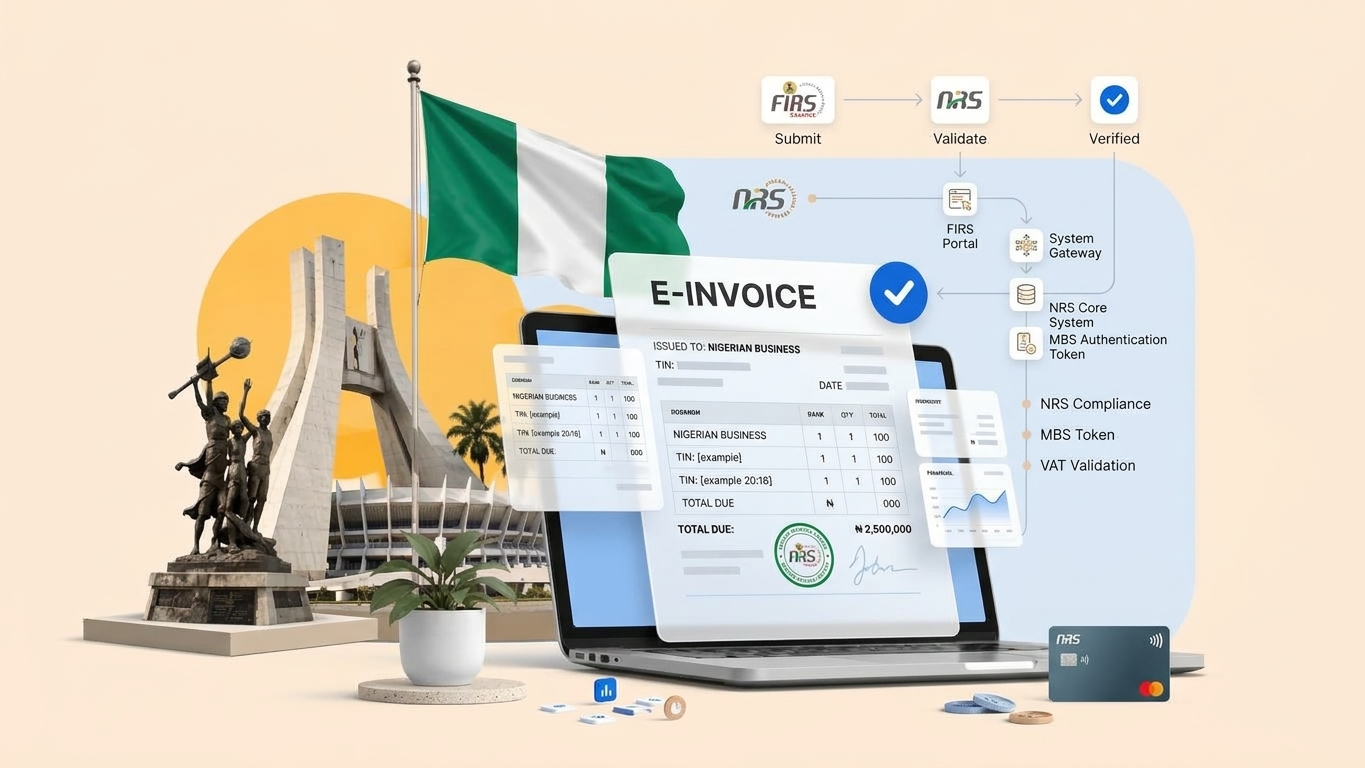
E-invoicing means creating and sending your invoices through a digital system connected to the Nigeria Revenue Service (NRS), the agency that replaced FIRS when Nigeria's new tax laws took effect on January 1, 2026.
Instead of just emailing a PDF to your customer, each invoice is sent to the NRS platform, known as the Merchant Buyer Solution (MBS), for validation.
When an invoice is validated, it receives:
- An Invoice Reference Number (IRN): a unique number that proves the invoice is registered with the tax authority
- A QR code: which anyone can scan to confirm the invoice is genuine
In simple terms: your invoice now needs a government stamp of approval, issued digitally, before it fully counts.
Why is the government doing this?
The NRS's main goals are to:
- Reduce invoice fraud and fake receipts
- Improve VAT collection by seeing transactions in real time
- Make tax administration more transparent and less dependent on paperwork
For honest businesses, there's an upside too: cleaner records, faster verification, and fewer disputes about whether an invoice is real.
Who does it affect, and when?
The NRS is rolling it out in phases based on annual turnover:
- Large businesses (₦5 billion and above): came into scope from November 2025. The final onboarding deadline was July 31, 2026, and businesses that missed it now face penalties.
- Medium businesses (₦1 billion to ₦5 billion): went live on July 1, 2026, with a review period running through late 2026 and enforcement expected in early 2027.
- Smaller and emerging businesses (below ₦1 billion): onboarding is expected from 2027, with enforcement from 2028 and full nationwide adoption targeted by the end of 2028.
Timelines can shift, so always confirm the latest dates with the NRS or your tax adviser.
"I'm a small business. Why should I care now?"
This is the part most small business owners miss.
Large companies have been told to accept only compliant e-invoices with a valid IRN from their suppliers. Without a properly validated invoice, a business may not be able to claim back the VAT it paid on that purchase.
So think about it from your big customer's point of view. If you supply a bank, a manufacturer, an oil company, or a government agency, and your invoice doesn't meet their compliance needs, it becomes a problem for them. And businesses tend to prefer suppliers who make their lives easier.
Your official deadline may be 2027 or 2028. Your biggest customer's expectations may arrive much sooner.
Preparing early can become a real advantage when you're bidding for contracts.
What happens if a business doesn't comply?
For businesses already in scope, the risks include:
- Penalties and enforcement action under Nigeria's tax laws
- Lost VAT input credits, which means paying more tax than you should
- Rejected invoices from customers who need compliant records
- Delayed payments while invoice problems get sorted out
- More scrutiny from the tax authority
In short, non-compliance doesn't just risk a fine. It can slow down the money coming into your business.
How does a business connect to the NRS system?
Most businesses don't connect directly. Instead, they link their accounting or invoicing software to the MBS platform through an NRS-accredited Access Point Provider (APP) or System Integrator (SI).
The usual process looks like this:
- Register and onboard on the NRS Merchant Buyer Solution
- Connect your invoicing or accounting system through an accredited provider
- Test and validate that your invoices are accepted correctly
- Start transmitting invoices and receiving IRNs and QR codes
- Check your suppliers' invoices to make sure they're compliant too
The difficult part for most businesses isn't the registration. It's getting their own systems ready.
The real problem: messy invoicing systems
Here's what we see in many Nigerian businesses:
- Invoices created in Word or Excel by different staff
- Sales reps issuing handwritten receipts from a booklet
- Customer details stored in different places with spelling mistakes
- No single record of every sale
- Accounting software that nobody has updated in years
E-invoicing needs clean, consistent, structured data. If your invoices are scattered across five channels, connecting to the NRS will be painful and error-prone.
That's why e-invoicing is really a push for businesses to organise how they sell, bill, and record money.
How to get your business ready: a simple checklist
Whatever your size, you can start today:
- Know your turnover band so you know which deadline applies to you
- List every way your business issues invoices, including the informal ones
- Bring all invoicing into one system instead of scattered files and receipt books
- Clean up your customer and product records, including correct names and tax identification numbers
- Check whether your current software can connect to the NRS platform through an accredited provider
- Talk to your accountant or tax adviser about your specific obligations
- Train your staff on the new process before your deadline, not after
Businesses that prepare early don't just avoid penalties. They usually end up with cleaner books and faster payments.
Is e-invoicing a burden or an opportunity?
It's both. Yes, it requires effort. But businesses that move early get:
- One clear record of every sale
- Faster reconciliation and easier audits
- More trust from large customers and government clients
- Better data to understand how the business is really performing
Many businesses will use this moment to finally replace spreadsheets with a proper system, and they'll be better run because of it.
Let us help you get ready
At Navoteq Technologies, we build accounting systems, invoicing platforms, and ERPs for Nigerian businesses, and our team has worked on financial ERP services and revenue systems for national institutions.
We can help you:
- Bring your invoicing into one clean, organised system
- Upgrade or build software that's ready to connect to the NRS platform through accredited providers
- Clean up your sales and customer records before your deadline
Talk to us:
- Phone: 0913 025 7401
- Email: navoteqltd@gmail.com
- Website: navoteq.com
This article is for general information and isn't tax or legal advice. Please confirm your specific obligations with the NRS or a qualified tax adviser.